2026-11-27 ·
Why Your Garage Door Gets Stuck in Dallas Summers and What to Check First
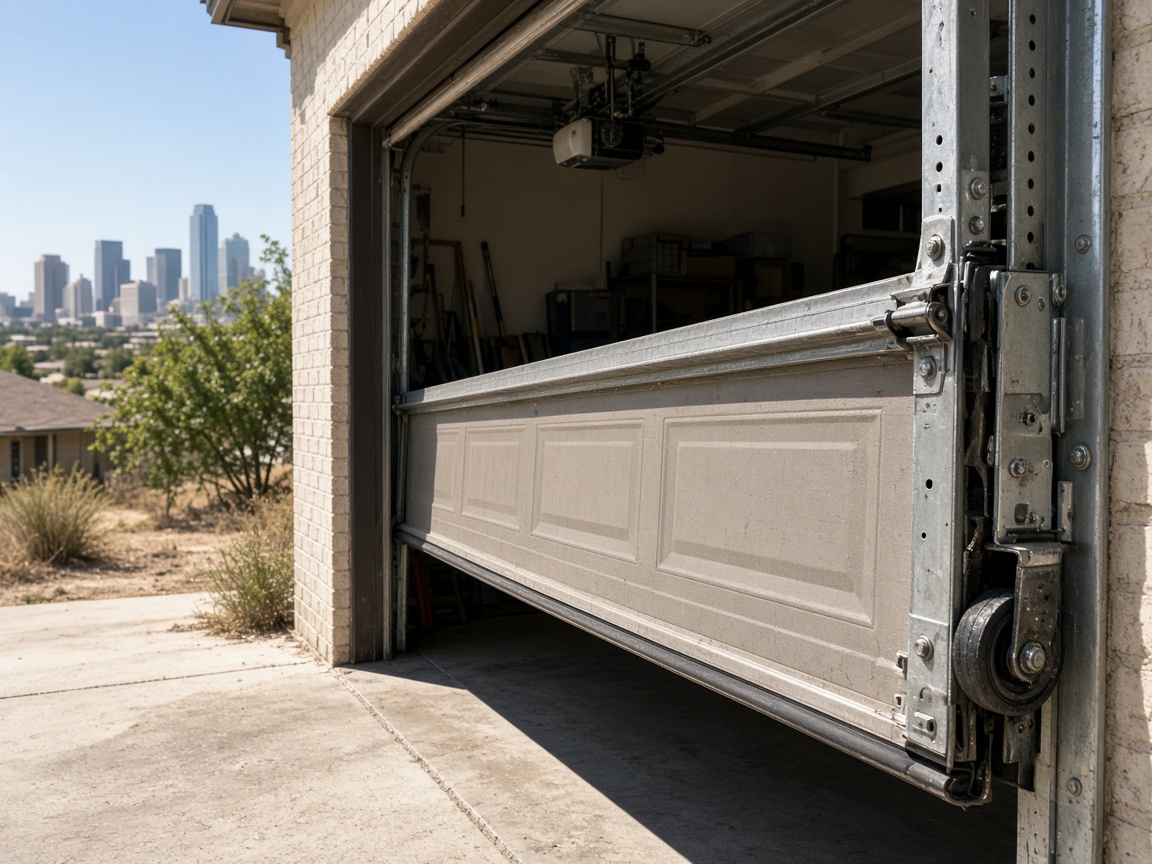
A garage door usually gets stuck in a Dallas summer for one of three reasons: metal parts expand in the heat, lubricant thins out and pulls grit into the moving parts, and the springs or opener are already working near their limit. In most cases, the fastest first check is the track and roller area along both sides of the door, followed by the springs and the opener's force settings. Start there before assuming a major component has failed, because many sticking doors come down to dirt, dried grease, or a track section that has shifted slightly out of line. The sections below explain how to inspect each area safely, what a normal result looks like, and when a problem has moved past a quick homeowner check.
Why Dallas Heat Makes Doors Stick
Dallas summers combine long runs of triple-digit afternoons with heavy sun on south- and west-facing garage doors. Steel panels and tracks expand as they warm, and even a small amount of growth can push a roller against the track wall or make the door bind near the top of its travel. The problem often appears in the afternoon and eases after dark, which is a useful clue that thermal expansion is involved. Heat also softens grease and older lubricants, so they slide out of hinges and roller bearings and collect dust from the driveway and yard. Once that grit mixes with the lubricant, the door meets resistance it did not have in spring. If the door catches only on the hottest days and runs smoothly in the cool morning, the cause is most likely friction and fit rather than a dead part.
Check the Tracks and Rollers First
The track system is the fastest place to look because it needs nothing more than a flashlight and a dry rag. With the door fully closed, run your eyes along both vertical and horizontal tracks for dents, bends, or gaps where a roller has been pushed out of its groove. Even a slight bend can make the door rub on one side only, which often looks like a motor problem but is really a track problem. Next, inspect the rollers themselves. Nylon rollers can flatten, crack, or wobble on their stems, and steel rollers can develop rough spots that catch on track seams.
- Wipe the inside of the track with a dry cloth to remove grit and old lubricant.
- Apply a silicone-based or garage-door-specific lubricant to hinges and roller bearings.
- Look for a roller that sits crooked or jumps out of the track when you move the door by hand.
- Check that the track bolts are snug, but do not overtighten them, since that can warp the rail.
Avoid spraying lubricant directly into the track channel. In Texas heat it can attract dust that hardens into sludge, which makes the sticking worse over time. A small amount on the roller bearings and hinge pivots does far more good.
Look at the Springs Before Anything Else
The springs carry most of the door's weight, so they are the next thing to evaluate after the tracks. Torsion springs sit on a bar above the door, while extension springs run along the sides of the track. Look for visible gaps between coils, rust, or a spring that appears stretched or loose. A door that sits lower on one side, or one that feels noticeably heavier when lifted by hand, often has a spring that is losing its strength. Heat can accelerate that wear, so an aging spring may hold fine in spring and then fail to balance the door once July temperatures arrive.
Do not attempt to adjust or release spring tension yourself. These springs store a large amount of energy even when they look relaxed, and a mistake can cause serious injury. If you spot any sign of spring wear, the safe route is to have a technician inspect and replace the spring. You can learn more about that process on our garage door spring replacement page.
Test the Opener and Its Force Settings
If the tracks and springs look sound, the opener may be the source of the trouble. Start by disconnecting the trolley with the emergency release cord, then lift the door slowly by hand from the handle. A healthy door should rise and stop where you leave it without jerking or sagging. If the door moves freely by hand but stalls or reverses when the motor runs, the problem is likely the opener's force or limit settings, which heat can throw off by changing how easily the door travels. Many openers also have a reverse-force adjustment, which should be set so the door reverses on an obstacle but does not reverse for a normal summer bind.