2026-11-27 ·
Signs Your Garage Door Opener Is Failing in Dallas
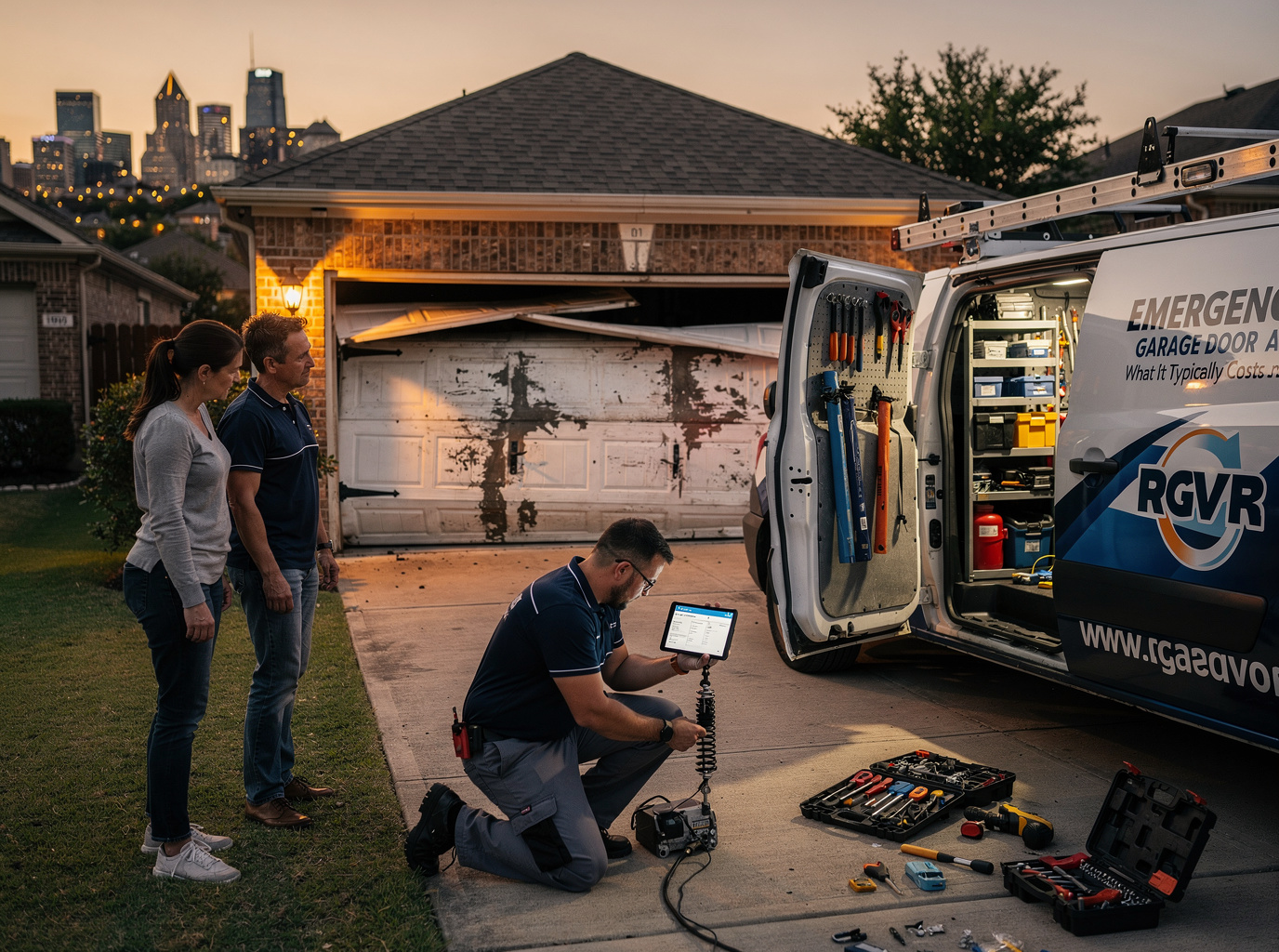
A garage door opener rarely stops working all at once. In Dallas homes, the first signs usually show up a little at a time: a remote that works one day and not the next, a door that hesitates halfway up, or a grinding sound that was not there last summer. Heat, dust, and the daily up-and-down of a busy household wear the opener's moving parts, and the door itself — springs, cables, rollers, and track — adds strain when it falls out of balance. Catching the signs early means the problem can be found and explained before the door stops altogether.
The Remote or Wall Switch Works Only Sometimes
An opener that responds to the wall switch but not the remote, or the other way around, is one of the clearest early signs. Start with the simple checks: a remote battery that is running low, a remote that has lost its pairing, or a wall switch with a loose wire. If new batteries and a fresh pairing do not steady the response, the trouble is usually inside the opener — a worn receiver, a tired logic board, or wiring that has loosened where it passes through the wall. Heat in a Dallas garage can make these faults come and go, so a problem that clears up by evening is still worth having inspected.
Grinding, Straining, or New Noises
A healthy opener hums and the door moves smoothly. Grinding, scraping, or a motor that strains and labors points to a door that is fighting the opener. The usual causes are dry or worn rollers, a track that has shifted out of square, or springs that no longer carry their share of the door's weight. When the springs weaken, the opener has to lift more than it was built for, and that strain wears the drive gear and the motor. A door that has become noisy over a few weeks is telling you the balance has changed, and an inspection can show which part is carrying the extra load.
The Door Reverses for No Reason
A door that starts down and then reverses on its own, or refuses to close at all, is usually a safety sensor problem — but not always. Dust on a sensor lens, a sensor knocked out of line by a bicycle or a storage bin, or a wire that has worked loose will all make the opener think something is in the way. The same reversing can come from a door that binds in its track, so the opener's force setting trips and sends it back up. Before assuming the opener has failed, check that both sensor lenses are clean and facing each other, and that nothing is blocking the track. If the reversing continues with a clear path and clean sensors, the opener's travel limits or force settings need to be checked during an inspection.
Slow or Jerky Travel
A door that moves in fits and starts, pauses halfway, or crawls through the last part of its travel is another sign the opener is struggling. Worn rollers and a dry track make the door stick and release in jerks. A chain or belt that has stretched, or a drive gear with worn teeth, will slip under load and the door will hesitate. In Dallas, summer heat dries lubricant faster, so a door that was smooth in spring can turn jerky by August. Slow travel is not just an annoyance: a door that stalls partway can drop if a spring or cable lets go, so a jerky door is worth having looked at rather than lived with.
Safety Sensors and What to Check
The safety sensors near the floor on each side of the door are the opener's way of knowing whether something is underneath. When they work, the door will not close on a person, a pet, or a vehicle. When a sensor is dusty, misaligned, or its wire is damaged, the opener will often refuse to close the door or will reverse it. Wipe both lenses with a soft cloth, make sure each sensor's indicator light is steady, and check that the sensors point directly at each other. If the lights blink or stay out after cleaning and realigning, the sensor or its wiring has failed and the opener will keep refusing to close until it is repaired.
What an Inspection Covers
When we inspect a failing opener, we start with the door itself: the springs, cables, rollers, and track, because an opener cannot work well on a door that is out of balance. We disconnect the opener and lift the door by hand to feel whether it moves freely and stays put halfway up. Then we check the opener's drive, the travel limits, the force settings, and the safety sensors. Each finding is written down and explained in plain terms, so you can see which part has failed, what can wait, and what needs attention now. If a part is replaced, we show you the old part alongside the new one and walk you through what changed, then test the door through full cycles before we leave.