2026-11-27 ·
Is Your Garage Door Safe to Open Manually? A Dallas Homeowner's Guide to Power Outages and Storm Damage
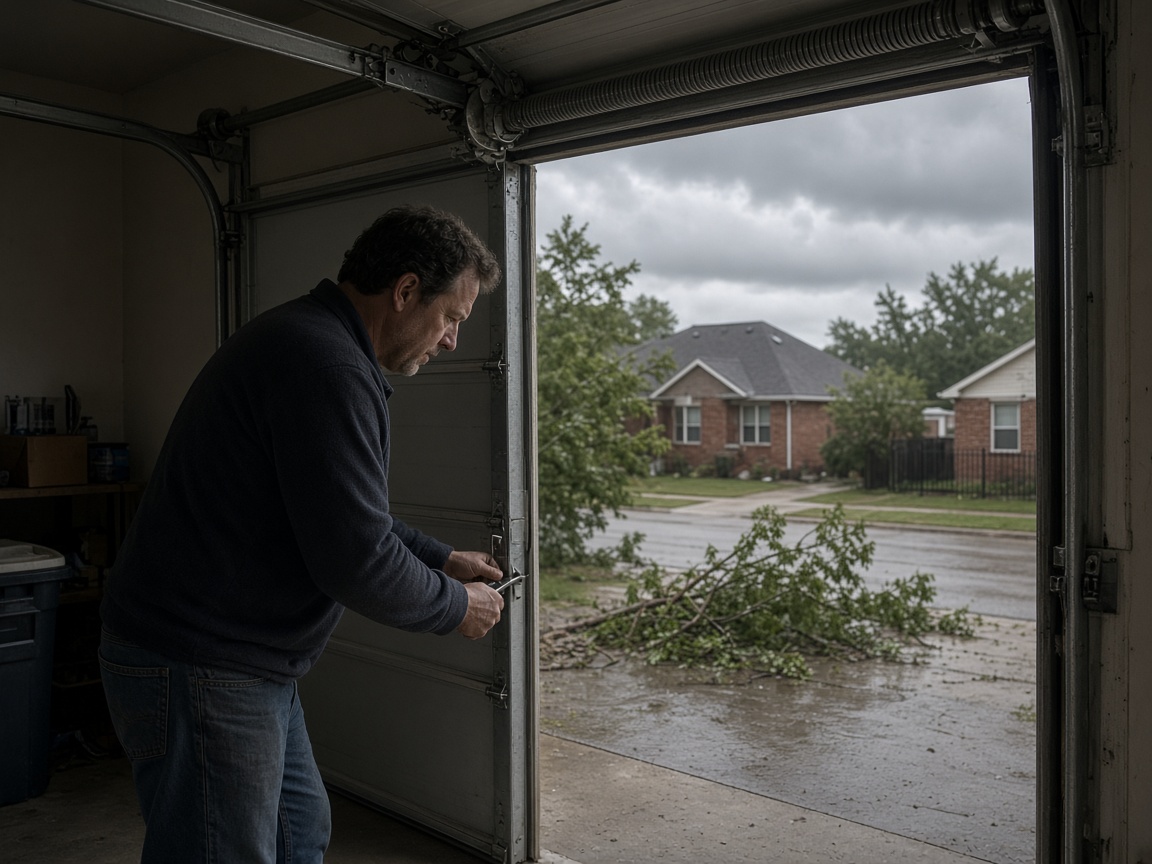
For most Dallas homeowners, the answer is yes, but only when the door is mechanically sound and you release the opener correctly before lifting. A garage door that is balanced, has intact springs and cables, and runs freely in its tracks can usually be raised by hand during a power outage without any special tools. A door with a broken spring, a bent track, or storm damage is a different situation, and lifting it can injure you or make the damage worse.
North Texas outages often arrive with severe weather. Spring and summer thunderstorms bring high winds, hail, and occasional flooding across neighborhoods from Oak Lawn to Lake Highlands, and a single storm can knock out power for hours or days. Knowing what your door can safely do without electricity is worth learning before the next outage, not during it.
Checking Whether the Door Is Balanced
Before you ever pull the release, lift the door by hand a few inches once it is closed and the opener is still connected. A properly balanced door should feel light and should stay in place when you let go at about waist height. If it slams down, shoots up, or drifts, the springs are either worn or out of adjustment, and manual operation becomes risky. This simple test tells you more than any visual inspection because it shows how the door actually carries its own weight.
Also look at the springs themselves. Torsion springs mounted above the door should be intact, with no visible gaps in the coil. Extension springs along the sides should not be stretched or hanging loose. If a spring is broken, the door may feel heavy and uneven, and it can drop suddenly once the opener is disconnected. A door in that condition should stay closed until a technician has inspected it, and if you suspect a spring failure, a garage door spring replacement is the proper repair rather than a manual workaround.
Disengaging the Opener Step by Step
Most residential openers have a red release cord hanging from the trolley that runs along the rail. The handle typically sits about 6 feet off the floor, so you can reach it without a ladder. Pull the cord firmly and straight down once. This disconnects the trolley from the door, and the door should now move freely by hand. Do not wrap the cord around your hand or lean on it while the door is moving.
Lift the door slowly and steadily, keeping your hands on the bottom bar or handle and your body clear of the opening. Lift all the way up or lower it all the way down rather than stopping halfway, since a partially raised door can shift unexpectedly. Keep children and pets well away from the door during the entire process. When power returns, close the door fully and pull the cord only if you need to, then reconnect the trolley by pulling the cord again so the opener can reengage.
Storm Damage That Makes Manual Lifting Unsafe
After a storm, walk around the outside of the door before attempting to open it. Dents in the bottom or middle panels, bent or pulled-out sections, and damage to the top roller brackets are all signs that the door is no longer tracking straight. A door that is out of its tracks can jump or bind when lifted, and a wind-damaged panel can detach entirely. Hail dents alone usually do not prevent manual operation, but they often signal stress on the hinges and rollers that should be checked.
Look at the tracks as well. If a track is bent, separated from the wall, or pulled loose from its mounting, do not force the door through it. Visible cable damage, a cable that is frayed or sitting loose on the drum, is another serious warning sign. In these cases, the door should remain closed and secured, and you should contact a professional for emergency garage door repair in Dallas rather than attempting to lift it yourself.