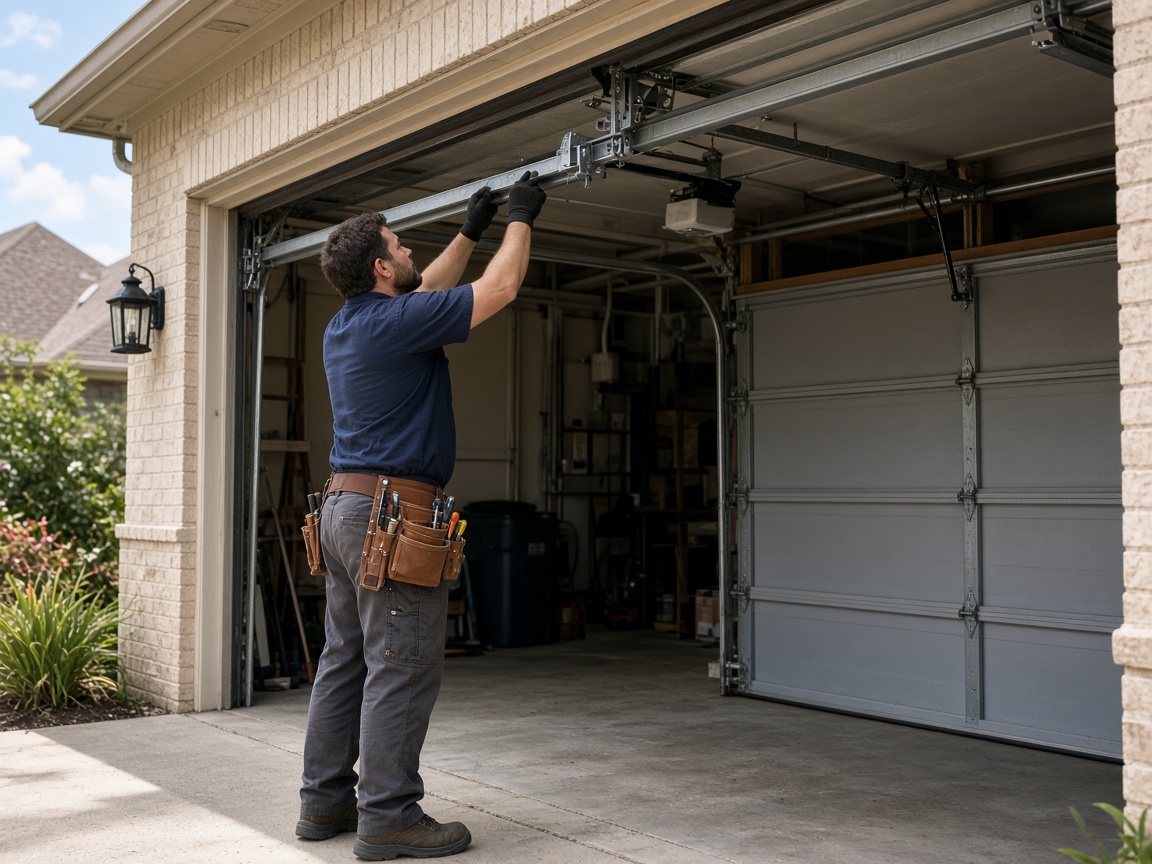
Emergency Garage Door Repair Dallas works out of 1911 Pacific Ave in downtown Dallas, and we take calls for doors that will not open, doors that will not close, and doors sitting crooked in their tracks. A door that fails at the wrong moment disrupts the whole household, so we start by finding out what failed and why. Then we explain it in writing before any work begins.
Why Households Across Dallas Call Us
Emergency Garage Door Repair Dallas operates from the downtown core, which means we see the older housing stock, alley-served garages, and steel and wood doors that show up throughout the central neighborhoods. We have built every visit around one rule: find out what actually failed before anything gets replaced. Each call begins with an inspection of the door, springs, tracks, rollers, cables, and the opener's safety reversal, and the results are written down in plain language. You receive that written account before any work starts, including what needs attention now, what can wait, and what is only showing early wear. Nothing changes until you have read it and decided how you want to proceed. When parts are replaced, we walk through the removed components next to the new ones, pointing out wire gauge, roller material, cable strand count, and where the wear came from. Questions get straight answers instead of jargon. We also read the door as part of the whole home, so we will tell you when a problem is really about a bent track from a bumped vehicle or a stripped opener gear rather than the door itself. That honest reading of the situation is what we want people to remember about the visit.
Why Waiting on a Broken Garage Door Usually Backfires
A garage door that still works but makes new noises is usually telling you something. In Dallas, the first culprit is heat. Summer afternoons push garage interiors far above outdoor readings, and that daily swing expands and contracts steel springs and tracks, slowly wearing the parts that carry the door's weight. Lubricant that was fine in spring dries out under that heat, so rollers begin to grind and the opener works harder to compensate. Spring storms bring the second problem. Heavy rain and gusty wind can knock a door off its track, especially single-panel doors and older wood doors that have swelled and warped. A door that has jumped its track rarely returns to normal on its own, and forcing it open can bend the track further or tear a cable. Then there is the opener. Many openers in the central neighborhoods were installed when doors were lighter, and the mismatch shows up as strain and early burnout. Waiting until the door will not move at all usually means a longer visit, a second trip, and sometimes damage to nearby parts that would have been a simple fix a few weeks earlier. An early inspection takes little time and keeps small problems small.
How We Do the Work Properly
Good repair work is mostly about sequence. First, we inspect the door in its closed position and again while it moves through a full cycle, watching for binding, uneven lift, or a track that is out of plumb. Second, we check the load-bearing hardware, including springs, cable drums, end bearings, and anchor points, because a failure in one part usually stresses the others. Third, we write the findings down. The written summary lists each component, its condition, what it means for safe operation, and what we recommend in order of urgency. Fourth, nothing moves forward until you have read that summary and told us which work to proceed with. Fifth, once approved, we complete the replacement and walk you through the removed parts next to the new ones so you can see both the wear and the upgrade. Sixth, we run the door through several full open and close cycles, test the safety reversal, and confirm the opener's travel limits are set correctly. Last, we clear the work area and hand over the old parts if you want them. That sequence keeps the work visible and the decisions in your hands.
A Typical Repair Call in Lakewood
A two-car sectional door on a 1950s-era home near Lakewood dropped halfway down with a loud crack after a spring storm rolled through. The household could not get the car in or out, and the opener kept straining against the door until it shut off. When we arrived, we found the torsion spring had broken, the cable on one side had frayed where it wrapped the drum, and two rollers had flattened from years of running on a dry track. The opener itself was fine, but it had been pulling against a door that was heavier than the spring system was balanced for. Before touching anything, we inspected both sides, the drums, the track alignment, and the hinges, then wrote out the findings: the broken spring, the damaged cable, the worn rollers, and a recommendation to replace the spring as a matched pair, since the second spring had the same age and wear pattern. The homeowner read the summary and approved the work. We replaced the spring, cable, and rollers, then set the old and new parts side by side on the driveway so the difference in wire gauge and roller material was clear. We tested several full cycles, confirmed the safety reversal, and adjusted the opener's limits. The door now runs smoothly, and the household knows which parts failed, why they failed, and what to watch for at the next inspection.
Common Door Problems We Repair Most Often
Broken Torsion Springs
A torsion spring is the bar mounted above the door that does most of the lifting, and when it snaps, you usually hear a sharp bang from inside the garage. The door often feels suddenly heavy, and the opener may strain, groan, or stop partway up. Four points matter here. First, springs fatigue faster in Dallas than many people expect, because summer heat and winter cold snaps flex the metal every day. Second, springs almost always come in pairs, so one failure means the other is close behind. Third, replacement has to match the door's weight and cycle rating, not just the length of the old spring. Fourth, we measure the spring, check the cable drums and bearings, and then put those findings in writing before anything is replaced. You see the old spring beside the new one before the work is considered finished.
Off-Track Doors
A door that has jumped its track usually looks crooked, sits at an angle, or grinds against the frame as it tries to move. Four things explain most of these calls. First, storm wind can push a door sideways, especially on single-panel and older wood doors. Second, a bumped vehicle or a loose roller can start the problem, and forcing the door open can make it worse. Third, track alignment is measured, not guessed, since a track that is even slightly out of plumb will keep pulling rollers off the rail. Fourth, we check the rollers, hinges, and cable tension at the same time, because a track problem often hides a worn component nearby. We explain each finding in writing, show you the track sections we adjusted or replaced, and only then close out the visit.
Snapped Lift Cables
A lift cable carries the door's weight up the track, and when one frays or snaps, the door can drop unevenly and tilt. Four details shape the repair. First, cables fail most often where they wrap the drum, where stress concentrates over repeated cycles. Second, a single broken cable is a reason to inspect the other side, since both cables share the same load and age. Third, replacement must match the door's size and the drum's configuration, so we check both before ordering anything. Fourth, we inspect the drums, bearings, and anchor points while the door is open, then write out the findings. You read the summary, approve the work, and see the old cable next to the new one when we walk through the job.
Technician insight
In Dallas, the thing that catches most people out with garage door repair is assuming one broken spring means only one spring needs replacing. In older central neighborhoods, the two springs were installed together and have shared the same heat cycles for years, so the second one is usually close behind. We always show the matching spring alongside the broken one and explain the wear in writing before the work proceeds.
Dropped Sectional Door After a Spring Storm
A two-car sectional door in an older Dallas home dropped partway down with a loud crack after a storm, and the opener kept straining until it shut off. Inspection found a broken torsion spring, a frayed cable, and worn rollers, with a recommendation to replace the spring as a matched pair. The findings were written out and approved before work began, and the replacement parts were walked through beside the old ones. The door now runs smoothly and tests cleanly through several full cycles.
Garage Door Installation and Replacement Services We Offer
✓Garage Door Roller Replacement in Dallas
Worn or cracked rollers cause grinding, jerky movement, and doors that stall partway up. We inspect each roller, the bearings, and the track surface, then explain in writing which rollers need replacing and why. Nylon and steel options are shown side by side so you can see the difference before anything is installed.
✓Garage Door Maintenance in Dallas
Routine maintenance keeps springs, cables, hinges, and rollers in working order between repairs. We lubricate moving parts, check track alignment and fastener tightness, test the safety reversal, and note any early wear in writing so you can plan ahead. Maintenance visits are most useful before summer heat and after storm season.
How it works
- 1
Inspection on Site
We inspect the door in the closed position and through a full cycle, checking springs, cables, drums, rollers, tracks, hinges, and the opener's safety reversal.
- 2
Written Findings
Every component is recorded with its condition, what it means for safe operation, and a recommended order of work. You receive this summary before any work starts.
- 3
Your Approval Comes First
Nothing is changed until you have read the findings and told us which work to proceed with. Questions are answered in plain language before we begin.
- 4
Old and New Parts Walk-Through
Once the work is complete, we place removed parts beside the replacements and explain the differences in material, gauge, and wear pattern.
- 5
Testing and Cleanup
We run several full cycles, confirm the safety reversal and opener limits, clear the work area, and hand over old parts if you want them.
Pricing
Scope is set in writing after inspection, and you decide on the work before anything is changed.