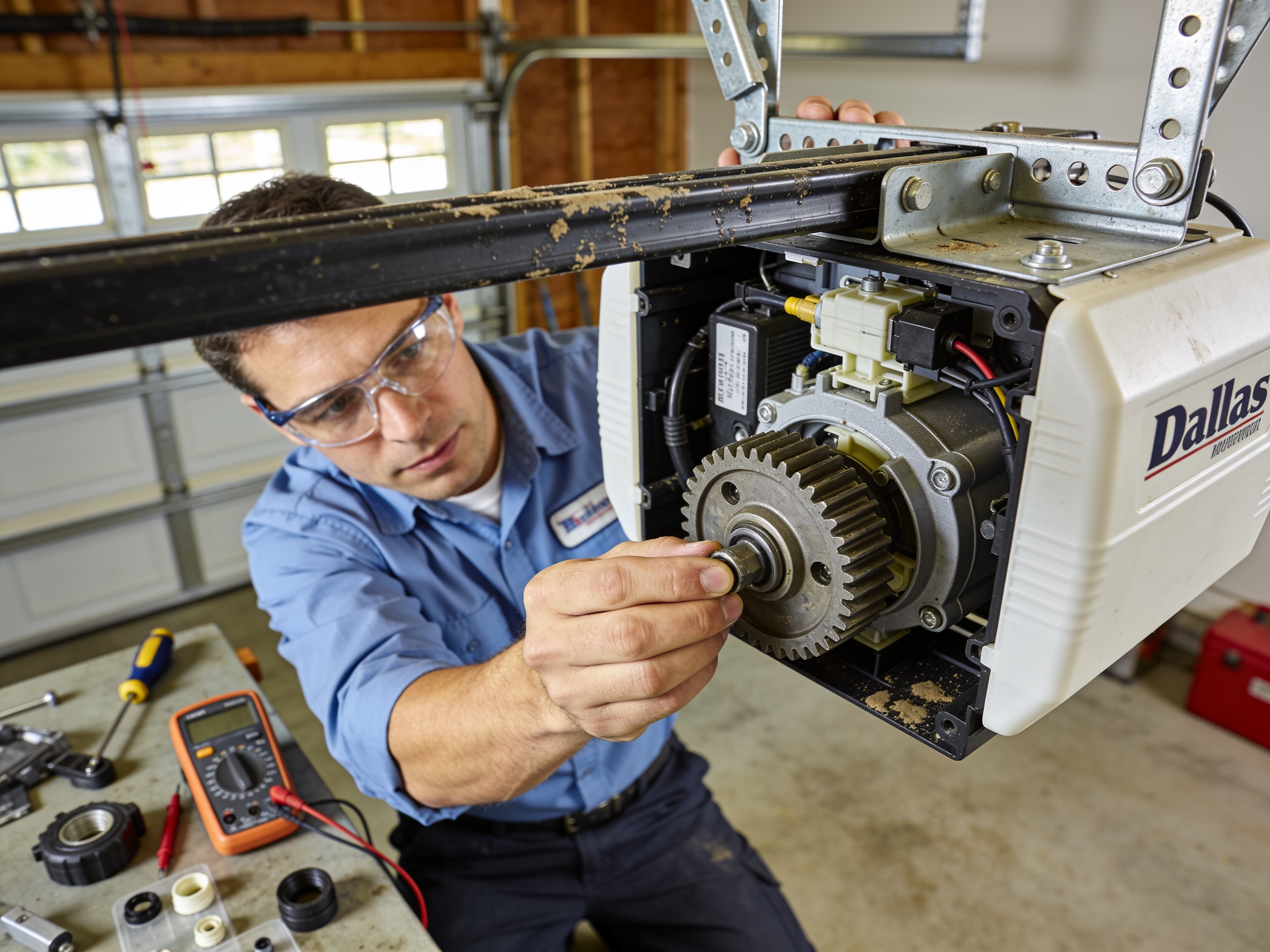
When a garage door stops mid-cycle, jams halfway up, or refuses to close before you leave for work, the problem rarely waits for a convenient day. Emergency Garage Door Repair Dallas operates from 1911 Pacific Ave in the downtown core, which keeps us close to the older brick buildings around the Arts District, the lofts near Pacific and Main, and the detached garages in neighborhoods just east and north of the central business district. This page explains how we approach an urgent door call, what we look for during inspection, and how we handle the conversation before anything is replaced.
Why Homeowners Call Us
Trust comes from how we work, not from badges on a wall. We are a downtown shop, so our address is a fixed, checkable location rather than a call center somewhere else in the metro. When we arrive, the first thing we do is inspect the whole assembly: springs, cables, drums, rollers, hinges, brackets, tracks, the opener, and the safety sensors. We do not start pulling parts off the moment the bay door goes up.
Every finding gets written down before work begins. You will see what is broken, what is worn, what is close to failing, and what we recommend now versus later. If you want time to think it over, the notes stay with you. Nothing is replaced until you have read the explanation and agreed to the specific work.
We also walk through the old parts and the new parts side by side. A worn roller beside a fresh one, a cracked bracket next to its replacement, a frayed cable compared with a new run of cable. That comparison is usually the clearest way to understand why a repair was needed, and it lets you judge the work with your own eyes rather than taking our word for it.
Our approach is simple: inspect first, explain in writing, show the parts, then do the agreed work.
Why a Garage Door Problem Should Not Wait
Dallas puts garage doors under more stress than many people expect. Summer afternoons regularly push temperatures past 100 degrees, and that heat softens nylon rollers, dries out lubricant on springs and hinges, and expands metal tracks just enough to change how the door travels. A door that moved smoothly in April can bind by July.
Spring storms bring a different problem. Hail and wind-driven rain find their way into weatherstripping and bottom seals, and the moisture works into steel sections and bearings. Left alone, a small corrosion issue on a bottom bracket can turn into a sudden failure on a cold morning.
The clay soil common across much of the metro also plays a role. Shifting foundations can throw a garage slab or header slightly out of level, and the door follows that movement. A door that looks like an opener problem may actually be a track that has drifted out of plumb.
Waiting usually makes the repair larger. A worn roller that gets ignored can damage the track. A fraying cable can snap under load, and a spring under tension is never something to set aside. Addressing the problem early keeps the job smaller, safer, and easier to explain to everyone in the household.
How We Do the Work Properly
Good repair work follows a sequence, and we keep to it on every call.
- Assess the door as it sits. We check whether the door moves by hand, whether the opener responds, and how the safety sensors and reversal behave.
- Inspect each component. Springs, cables, drums, rollers, hinges, brackets, tracks, and the opener mechanism are checked for wear, alignment, and tension.
- Write up the findings. Before any part comes off, you receive a written explanation of what failed, what is worn, and what can wait.
- Walk through old and new parts. We show the removed component beside its replacement so the change is clear.
- Complete only the agreed work. Once you approve, we do the work, then cycle the door several times and confirm the safety reversal before we leave.
This order protects you from surprises, and it protects the quality of the finished job.
A Typical Downtown Service Call
A homeowner near Fair Park called after their door began reversing partway through its close on a afternoon that was well over 100 degrees. There was no visible obstruction, and the opener itself sounded normal. The first thing we did was leave the motor alone and work through the door from the outside in.
On inspection, one sensor bracket had shifted on its mount, so the sensors were no longer aligned across the opening. Two rollers showed heat hardening and flat spots, and the track at the bottom was slightly out of plumb. None of these issues alone explained the full behavior, so we tested each one in turn and recorded what we found.
Before touching anything, we wrote up the findings and walked the homeowner through the old and new rollers side by side. They approved the agreed work: sensor realignment, track adjustment, and roller replacement. After the repairs, the door closed cleanly through repeated test cycles, and the reversal behaved as it should.
The lesson for this household was that the opener was rarely the problem. The door had been telling them what was wrong for weeks before it reversed.
Garage Door Services We Handle in Dallas
Our work covers the parts of a garage door that fail most often in this climate, with inspection and written findings at every step.
Garage Door Opener Repair in Dallas
An opener that hums but does not move the door, or that runs in the wrong direction, usually points to one of a few causes, and we check them in a set order. We begin with the safety sensors, since a bracket shifted by heat or bumped by a car is common in Dallas driveways. We then check limit settings, which drift and can stop the door too early or let it run past the closed position. Next we inspect the drive gear or trolley on belt and chain units, along with the wall control and the power supply. Each result is written down, so you know whether the fix is a simple adjustment or a component replacement.
Garage Door Spring Replacement in Dallas
Torsion springs store a large amount of energy, so we never treat them as a casual fix. When a spring breaks, the door often looks stuck or sags unevenly, and the opener strains to lift it. We measure the door weight and the existing spring specifications before recommending a replacement. We show you the old spring next to the new one and explain how tension is set. We also check the cables, drums, and bearings, since a new spring paired with worn hardware will fail early.
Garage Door Track and Alignment Work in Dallas
A track that is out of plumb or loose at its mounts causes noise, binding, and uneven travel. In Dallas, shifting clay soil and seasonal temperature swings can move a header or wall enough to change the track position over time. We inspect the vertical and horizontal sections, the mounting brackets, and the roller path. We tighten or realign the track where needed and recheck the door through a full cycle. Written findings show exactly which bracket or section was adjusted and why.
Questions Before We Start and Your Next Step
Most people reaching out for emergency garage door work are dealing with a door that has stopped working or started behaving in an unsafe way, and they want to know what happens next. Here is how the process typically flows, so you know what to expect from the first call through the finished job.
When you contact us, describe what the door is doing. Note whether it stopped suddenly or has been getting worse for a while, whether the opener responds, and whether the door reverses or moves unevenly. These details help us decide how to prioritize the visit and which tools to bring. We will tell you the arrival window when you reach us, and we will not promise a time we cannot keep.
When we arrive, we inspect the door before recommending anything. You will receive written findings that explain what failed, what is worn, and what can wait. Old parts and new parts are shown side by side, so you can see the change rather than simply trusting a description. Nothing is replaced until you have read the explanation and approved the specific work.
If the door is blocking your only vehicle or leaving the house exposed, tell us that at the start. Safety-related issues such as a door that reverses unpredictably or a spring that appears damaged should be handled before anyone uses the door again. We will tell you clearly whether the door is safe to operate in the meantime, and what to avoid until the repair is complete.
Your next step is simple. Reach out with a short description of the problem and the address of the property, and we will confirm the visit and what to have ready. Keep the area around the door clear, and note any recent changes, such as a storm, a bump from a vehicle, or a noise you have started hearing. Those small details shorten the inspection and help us arrive prepared.
After the work, we cycle the door several times, confirm the safety reversal, and review the written record with you. That final walk-through is the point where the job is complete, and it is where you can ask any remaining questions before we leave.
Technician insight
In Dallas, the thing that catches most people out with Garage Door Opener Repair is the sensor bracket. Afternoon heat and the occasional hail-driven knock shift it just enough that the door reverses for no visible reason, and homeowners often replace the opener before anyone checks alignment. We always check the sensors, track plumb, and roller condition before we touch the motor.
Door Reversing on a Hot Afternoon Near Fair Park
A homeowner's door began reversing partway through its close on a afternoon well over 100 degrees, with no visible obstruction and a motor that sounded normal. On inspection, one sensor bracket had shifted and two rollers showed heat hardening, while the track was slightly out of plumb at the bottom. After writing up the findings and walking through the old and new rollers, we realigned the sensors, adjusted the track, and replaced the rollers the homeowner approved, and the door closed cleanly through repeated test cycles.
Garage Door Opener Repair Services We Offer
✓Roller Replacement in Dallas
Worn rollers cause noise, catching, and uneven travel, and Dallas heat speeds up that wear by hardening nylon and drying out lubricant. We inspect each roller for flat spots, cracks, and bearing play, and check the track surface they run on. Where rollers need replacing, we show you the old and new sets side by side and explain the choice between nylon and steel before any work begins. Findings are written down first, so you decide what happens next.
✓Garage Door Maintenance in Dallas
Routine maintenance catches small problems before they become emergencies. Our visit covers the springs, cables, hinges, bottom seal, and safety sensors, along with a lubrication pass on moving parts and a check of track alignment. Summer heat and spring storms are the main reasons we recommend a look at the door each year. You receive a written list of what was checked, what looks good, and what needs attention soon.
How it works
- 1
Assess the Door
We check whether the door moves by hand, whether the opener responds, and how the safety sensors and reversal behave.
- 2
Inspect Each Component
Springs, cables, drums, rollers, hinges, brackets, tracks, and the opener are checked for wear, alignment, and tension.
- 3
Explain Findings in Writing
Before any part comes off, you receive a written explanation of what failed, what is worn, and what can wait.
- 4
Walk Through Old and New Parts
The removed component is shown beside its replacement so the change is clear and easy to understand.
- 5
Complete the Agreed Work
Once you approve, we do only the agreed work, cycle the door several times, and confirm the safety reversal before leaving.
Pricing
Written findings come before any work begins, so you decide which repairs happen now and which can wait.