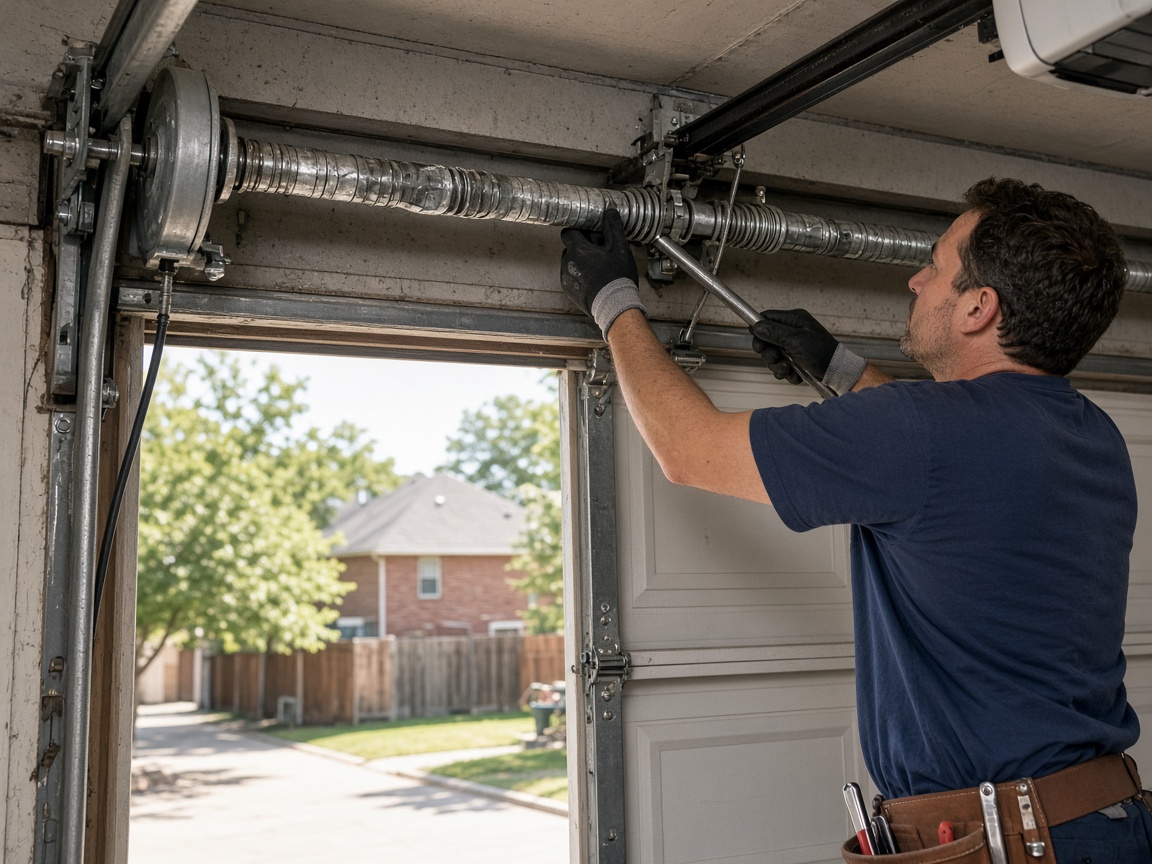
Garage doors in Dallas rarely fail on a convenient day. A spring lets go early on a weekday morning, or a door stalls halfway up after a summer storm. Emergency Garage Door Repair Dallas works from 1911 Pacific Ave in downtown Dallas and serves homes across the city, from older bungalows near Oak Cliff to newer builds in the northern suburbs. Every visit begins with an inspection, and every job begins with findings written down before any part is touched.
Why Choose Emergency Garage Door Repair Dallas
We work out of a physical shop at 1911 Pacific Ave, so the answer to where we are is downtown Dallas, not a call center somewhere out of state. That matters when a door has to be looked at quickly, and it matters more when a repair turns into a conversation about what the next five years of wear will look like.
What we can point to is how we work rather than a wall of letters. We open the door, check the spring balance, inspect the springs, cables, drums, rollers, hinges, and track, and note what we see. Then we explain it in plain writing before anything is repaired, so you can read it, compare it with anything another technician told you, and decide what happens next.
Trust in this trade comes from being able to check the work yourself. When a part is replaced, we set the old one on the driveway beside the new one so you can see the wear, rust, stretched coils, or cracked roller hub with your own eyes. We walk you through the difference in person. If a repair is not needed, we say so and leave the door as it was.
We also put in writing what you are agreeing to. Our findings list each item, why it matters, and what waiting could risk. Nothing gets added to the job without your approval in writing. That is the standard we hold ourselves to on every visit, whether it is a broken torsion spring at dawn or a routine check on a door that has been quiet for years.
Why Dallas Garage Doors Need Attention Now
Dallas summers push garage doors harder than most homeowners expect. Afternoon heat regularly climbs past the mid-90s and stays there for weeks, and metal parts expand and contract every day. Springs lose temper over time, rollers flatten or crack, and lubricant dries out and turns to grit. A door that rolled quietly in May can start grinding by August, and that is usually the first sign that a spring or roller is close to giving way.
Spring and early summer bring their own trouble. Hail and fast wind can bend tracks, knock sections out of alignment, and loosen brackets that were fine the year before. Once the ground softens after heavy rain, the clay soil common across North Texas shifts slightly, which can pull a slab out of level and throw a door off its track. Many homes in Lakewood, Oak Cliff, and older parts of East Dallas still carry original torsion springs that have done their work for decades.
Waiting rarely makes the problem easier to fix. A tired spring that is still holding a door up can snap without warning, and a second spring is often close behind the first. Catching fatigue early means one controlled repair instead of an unplanned emergency call with a door stuck open or closed. Written findings help you decide on timing with real information rather than guesswork.
How We Do the Work Properly
Our process is built around inspection first and repair second. We start by testing the door by hand and with the opener disconnected, checking that it stays put halfway up and that the balance holds. Next, we inspect each component: springs for gaps and stretching, cables for fraying, drums for alignment, rollers for flat spots or cracked hubs, hinges for wear, and track for bends or loose bolts.
The findings are written down before work begins. Each item is described in plain language, with a note on what it means for the door and what happens if it is left alone. You can read the list, ask questions, and approve only the items you want done. We do not add unapproved work partway through.
When a part is replaced, we lay the old component beside the new one and go over the differences together. You can see the wear pattern on a worn roller, the rust on a cable end, or the stretch in a spring coil. Once the work is finished, we test the balance again, run the door through a full open and close cycle, and confirm the safety reversal is working before we leave.
A Typical Dallas Service Call
A homeowner in a 1960s brick house in Oak Cliff calls on a weekday morning because the door dropped halfway down with a loud bang and now sits crooked on its track. The family has been using the side door, and nobody is sure whether the door is safe to run. This is the kind of call we see often, and the first thing we do is stop the door from being operated until we know what failed.
On arrival, we find one torsion spring has snapped near the center bearing. The second spring looks sound at first glance, but the coils show fatigue and the winding gap has opened. The left cable is frayed near the drum, and two nylon rollers on the upper track are flattened and cracked. We check the track for bends and find it is still straight, which means the damage is limited.
We write up each finding before touching anything. The homeowner reads the list, asks why the second spring should be replaced rather than left alone, and approves the work. We replace both springs, the cable, and the worn rollers, then set the old parts beside the new ones so the homeowner can see exactly what was failing. The door runs smoothly, the balance is set, and the safety reversal is tested before we leave. The homeowner knows what was done and why, in writing.
Garage Door Services Across Dallas
Most of our calls fall into a few patterns, and each one has its own local wrinkles. Below are three areas where we spend much of our time, along with what an inspection typically covers. The same inspection-first, written-findings approach applies to every one of them.
Garage Door Spring Repair in Oak Cliff and Lakewood
Older homes in Oak Cliff and Lakewood often still run original torsion springs, and those springs are the most common reason a door suddenly stops working. When a spring breaks, the door can drop fast and bind on the track, which strains the opener and the cables. We inspect the remaining spring for gaps between coils, rust at the winding cone, and signs of stretching. If one spring has failed, the partner spring is usually close to the same age and condition, so we check it with the same care. Our written findings explain whether one or both should be replaced, and why. We set the old springs next to the new ones so you can compare the wear directly before the work is signed off.
Roller and Track Problems After Dallas Storms
Spring and early summer storms across Dallas can shift tracks, bend sections, and crack the nylon or steel rollers that guide the door. A door that sticks, scrapes, or pulls to one side often has a single bad roller or a track that has moved just enough to bind. We check the track for level and plumb, measure the gap at the tops and sides, and inspect each roller for flat spots, cracked hubs, and worn bearings. Our findings list which rollers need replacing and whether the track needs realigning. Once the work is complete, we run the door through several full cycles to confirm it tracks cleanly without rubbing.
Opener, Sensor, and Safety Reversal Checks
Garage door openers in Dallas homes take a beating from heat, dust, and power fluctuations during summer storms. Common problems include a door that reverses for no clear reason, a remote that stops working, or a sensor that misaligns after a bump. We check the photo-eye sensors for alignment and clean lenses, test the force settings, and confirm the auto-reverse engages when the door meets resistance. We also check the opener's travel limits and the trolley and chain or belt tension. You receive written findings covering each check, and we explain in person why each reading matters for safe operation.
Technician insight
In Dallas, the thing that catches most people out with Garage Door Spring Replacement is assuming the second spring is fine just because the first one broke and the door still looks level. Springs in older Oak Cliff and Lakewood homes were usually installed as a pair and have seen the same heat and wear, so the partner is often close to failing too. We always check the gap between coils and look for rust at the winding cone before we say the second one can stay. When the findings are written down, you can see exactly why we are recommending what we are.
Snapped Torsion Spring in an Oak Cliff Garage
The homeowner called after the door dropped with a loud bang and sat crooked on its track, leaving the family unsure whether it was safe to use. On arrival, we found one torsion spring snapped near the center bearing, the partner spring showed fatigue with an opened coil gap, and a cable was fraying near the drum. We wrote up each finding before touching anything, and the homeowner approved replacing both springs and the cable. We set the old parts beside the new ones, retested the balance and safety reversal, and the door ran smoothly before we left.
Garage Door Spring Replacement Services We Offer
✓Garage Door Spring Replacement
Torsion and extension springs carry most of a door's weight, so when one fails, the door can drop or bind. We inspect both springs, explain the wear in writing, and replace only what the findings support. You will see the old and new springs side by side before the job is closed out.
✓Garage Door Roller Replacement
Worn or cracked rollers cause scraping, noise, and door binding on the track. We check every roller for flat spots, hub cracks, and bearing wear, then replace the ones that need it. We also check track alignment, since a bad roller can be a symptom of a track problem rather than the cause.
✓Garage Door Maintenance
Routine maintenance keeps springs balanced, hinges tight, and tracks clear of debris before small wear becomes a service call. Our visit includes lubrication, hardware tightening, cable and roller checks, and a safety reversal test. You receive a written summary of what was checked and what, if anything, needs attention next.
How it works
- 1
Inspection on Arrival
We test the door by hand with the opener disconnected and check whether it holds balance halfway up. We then inspect springs, cables, drums, rollers, hinges, and track one component at a time.
- 2
Written Findings Before Any Work
Each item we found is described in plain language, with a note on what it means and what waiting could risk. You read the list, ask questions, and approve only the items you want done.
- 3
Side-by-Side Walk-Through of Parts
When a part is replaced, the old component goes beside the new one so you can see the wear. We explain the difference in person before the old part is set aside.
- 4
Testing Before We Leave
We retest the balance, run the door through full open and close cycles, and confirm the safety reversal engages on resistance. We walk through the results with you before closing out the visit.
Pricing
We inspect the door first and explain the findings and the scope in writing before any work begins.