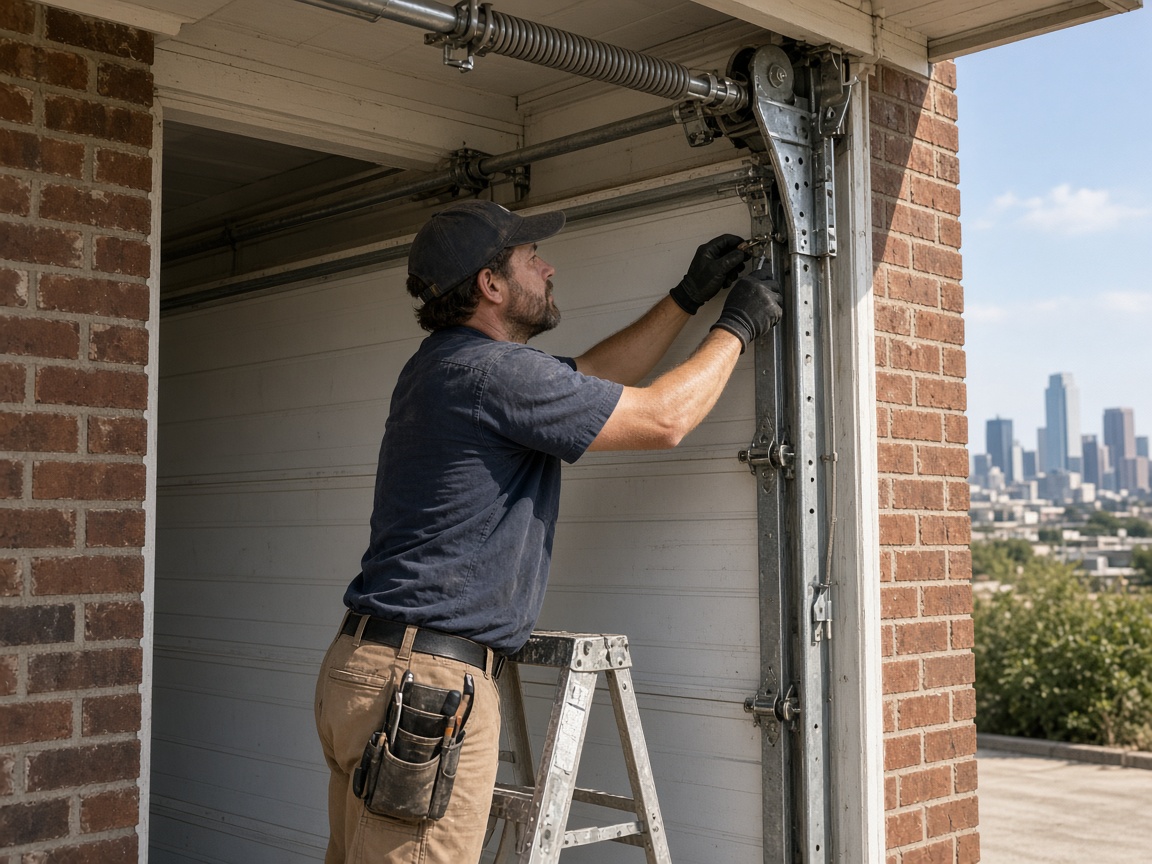
Emergency Garage Door Repair in Dallas
A garage door that won't close, sits crooked on its tracks, or has a snapped spring can turn an ordinary morning into a security problem fast. Emergency Garage Door Repair Dallas works out of 1911 Pacific Ave in downtown Dallas and takes urgent calls from Lake Highlands, Oak Cliff, Preston Hollow, and the older blocks near our own address. We start by making the opening safe and secure, then inspect the whole system before anything is changed.
Why Homeowners in Dallas Call Us
Most garage door calls come down to trust. You want to know what is wrong, why it failed, and what the fix involves before anyone picks up a tool. That is how we approach every visit. We inspect the door, the springs, the cables, the rollers, the tracks, the opener, and the safety sensors, and we check how each part interacts with the others. A door can look like it has one problem when the real cause sits elsewhere in the system, so we look at the whole assembly rather than the one part that is visibly broken.
Before any work starts, we put our findings in writing. You receive a plain-language summary of what we found, which parts are affected, and why each one needs attention. Nothing is hidden in a line item you cannot follow. If a part is worn but still functional, we say so and explain what to watch for. If a repair is not the right call, we tell you that too.
When parts are replaced, we walk you through the old components next to the new ones. You can see the worn roller hub or the stretched cable for yourself, compare it with the replacement, and understand what changed. Our workmanship is something you can inspect at the end of the job, and we are glad to show you each adjustment we made. Our office sits at 1911 Pacific Ave, so if you have questions after we leave, you know exactly where we are.
Why Waiting Makes a Garage Door Problem Worse
Dallas is hard on garage doors, and small faults rarely stay small here. Once summer temperatures climb past the high nineties, metal components expand and the lubricant on rollers and hinges thins out. A roller that was only noisy in May can seize by July, and the strain then moves onto the cables, the track, and the opener motor. Those parts were not designed to carry extra load for long.
Spring storms bring a different kind of damage. Hail dents panels and can knock tracks out of true, and strong gusts push a door against its stops until a bracket bends. Many homes in the older neighborhoods around Oak Cliff and Lake Highlands also sit on expansive clay. As the soil swells after heavy rain and shrinks during dry spells, the slab can shift by a fraction of an inch, which is enough to pull one side of a track out of alignment.
The most dangerous timing is the torsion spring. Springs carry a large amount of tension, and a worn spring can break without much warning, especially when the door is lifted or the weather changes suddenly. Acting early on a noisy roller or a door that closes unevenly usually means a smaller repair and fewer surprises, while waiting often turns a manageable fix into an urgent one.
How We Do the Work Properly
Every job follows the same sequence, so you always know where things stand.
- Secure the opening. If the door is stuck open or cannot close, we first make the garage safe and secured, then start the diagnostic. Safety comes before speed.
- Inspect the full system. We check the springs, cables, drums, rollers, hinges, tracks, brackets, opener, and photo-eye sensors. We measure track alignment and test the balance of the door by hand before reaching for any replacement part.
- Explain the findings in writing. Before work begins, you receive a written summary of each finding, the part involved, the reason it failed or wore out, and the work we recommend. You decide what goes ahead with complete information.
- Replace and adjust with a walk-through. We install the approved parts, set the tension and balance, and test the door through a full open and close cycle. We then show you the old components beside the new ones so you can see what was replaced and why.
Unique Dallas Scenario: The Door That Jumped Its Track After a Storm
Picture a typical situation on a Dallas street after a spring thunderstorm. The wind picks up overnight, a gust pushes against the garage door, and by morning one side sits higher than the other, the door hangs at an angle, and the opener groans when it tries to close. The homeowner's first instinct is often to tug the door back into place by hand or tighten the bolts on the track. That can make things worse, because a bent track or a loose bracket under tension can release suddenly and injure someone standing nearby.
When we arrive, the first step is to secure the opening and keep everyone clear of the spring assembly. Next we look at the track from floor to header. In neighborhoods with older slabs and shifting clay, the track bracket often works loose from the framing, and the roller on one side may have jumped its track. We check the cables for fraying, the drum for slippage, and the spring for signs of fatigue, since a storm can expose a spring that was already close to failing.
Once the findings are documented in writing, we reset the track, replace the bent bracket and any damaged roller, and re-tension the door so it lifts evenly. We then run the door through several full cycles and confirm the safety reverse works. The homeowner gets a written list of what was found, a look at the old bracket next to the new one, and a clear explanation of which part of the storm damage and which part of the older hardware caused the problem.
Common Garage Door Repairs in Dallas Explained
Torsion Spring Replacement in Dallas
Torsion springs sit above the door opening and do most of the lifting work, so when one breaks the door becomes very heavy and often stops partway up. In Dallas, springs are frequently worn by repeated heat cycles and years of carrying a heavy door. Replacement is not a job for a do-it-yourself attempt because the tension stored in the spring is significant. We inspect the spring's winding, the cable drums, and the shaft bearings before recommending a replacement, so you know whether the spring alone failed or whether something it depends on also needs attention. Each replacement is explained in writing first, and the removed spring is shown to you during the walk-through.
- Spring condition checked for stretching, rust, and winding gaps
- Cable drums and shaft bearings inspected for wear that would strain a new spring
- Balance and tension tested by hand before the door is returned to service
- Old and new springs compared side by side at the end of the visit
Off-Track Door Realignment in Dallas
A door that has jumped its track usually points to one of three causes in our area: a bent track section, a loosened bracket where the track meets the framing, or a slab that has shifted enough to change the door's path. Realignment is more than pushing the door back on its rail. We measure the track against the header and sidewalls, confirm the rollers sit squarely, and check that the door travels evenly from closed to open. If the slab movement is the root cause, we explain that in writing so you understand why the issue may return without attention to the track mounting. The walk-through shows you the parts that were straightened, reset, or replaced.
- Track measured for level, plumb, and parallel alignment
- Brackets and fasteners checked for loosening or stripped threads
- Rollers inspected for flat spots, cracks, or misseated bearings
- Door tested through several full cycles before the job is closed out
Garage Door Opener Diagnosis in Dallas
When an opener stops responding, grinds, or reverses for no clear reason, the motor is not always the culprit. Dallas summers push opener logic boards and gear assemblies hard, and a weak remote battery or a misaligned photo-eye can mimic a dead motor. We test the power supply, the limit settings, the safety sensors, and the trolley or drive system before recommending a replacement. If the opener does need replacing, we explain in writing which parts failed, what the new unit does differently, and how the old unit compares. You see the removed components and the new ones before we finish.
- Power supply and outlet tested for voltage and proper grounding
- Safety sensors and wiring checked for misalignment or damage
- Limit and force settings verified against the door's actual weight and balance
- Drive system and trolley inspected for wear before any motor is swapped
Frequently Asked Questions and Ne
Technician insight
In Dallas, the thing that catches most people out with Garage Door Repair is the track bracket, not the spring. Our clay soil swells and shrinks through the year, so the slab moves a little and the track pulls out of square, and homeowners often tighten the bolts without checking whether the frame has shifted. We always look at the header and sidewalls before we reset anything, because a track that keeps coming loose is usually telling you about the ground underneath it.
Door Hanging Crooked After a Spring Storm
A homeowner in the Oak Cliff area woke to a garage door sitting higher on one side after an overnight thunderstorm, with the opener straining to close it. We secured the opening first, then found the track bracket had loosened from the framing and one roller had jumped its track. We reset and reinforced the bracket, replaced the damaged roller, and re-tensioned the door, then walked the homeowner through the old bracket beside the new one.
Garage Door Repair Services We Offer
✓Roller Replacement in Dallas
Worn or cracked rollers cause noise, jerky movement, and track strain. We inspect each roller for flat spots, bearing wear, and stem damage, then explain in writing which ones need replacing. Old and new rollers are shown side by side before we finish.
✓Garage Door Maintenance in Dallas
Routine maintenance helps a door handle Dallas heat, storms, and shifting soil. We check springs, cables, hinges, tracks, and safety sensors, lubricate moving parts, and tighten hardware. You receive a written summary of the condition and what to watch between visits.
How it works
- 1
Secure the Opening
If the door is stuck open or cannot close, we first make the garage safe and secured. Safety is handled before any diagnostic work begins.
- 2
Inspect the Full System
We check springs, cables, drums, rollers, tracks, brackets, the opener, and the safety sensors. Track alignment and door balance are measured rather than guessed.
- 3
Explain Findings in Writing
Before work starts, you receive a written summary of each finding, the affected part, the reason it failed, and the recommended work. You choose what proceeds.
- 4
Replace, Adjust, and Walk Through
We install approved parts, set tension and balance, and test the door through full cycles. Old and new components are shown to you side by side before we close out the job.
Pricing
Every finding is written out and explained before any work starts, so you can review the recommended work and decide what goes ahead with the full picture in hand.