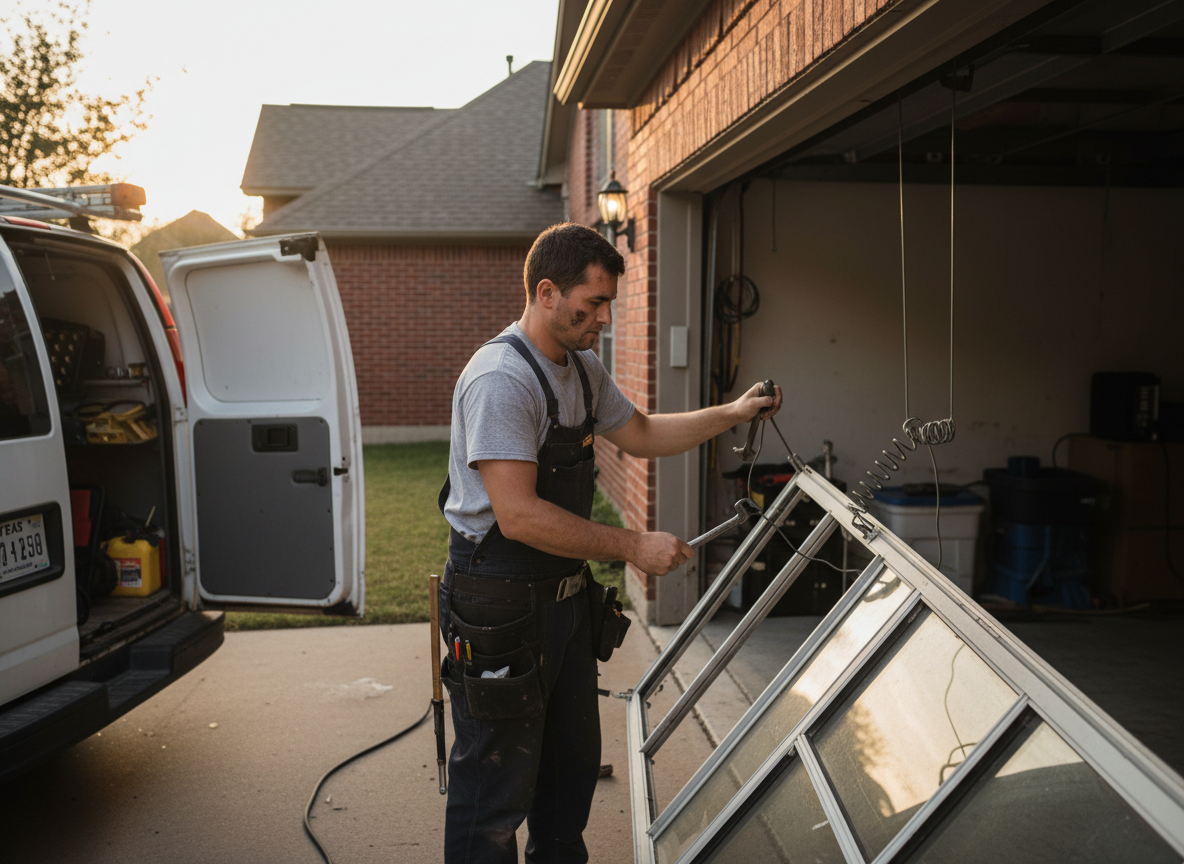
When a garage door stops halfway up, cracks a spring, or refuses to close before the school run, you need a crew that diagnoses the fault before anything is swapped out. Emergency Garage Door Repair Dallas handles residential and light commercial doors across the city, from Oak Cliff bungalows to newer builds north of the Dallas North Tollway. We start with a careful inspection, put our findings in writing, and wait for your go-ahead.
Why Homeowners and Property Managers Call Us
We are based downtown at 1911 Pacific Ave, Dallas, TX 75201, which means our technicians can reach most of the central neighborhoods without a long wait on the road. Our approach is built around transparency rather than pressure. Before we touch a spring or a track, we explain what we found, why it failed, and which options are reasonable for the door you actually have. You see the damaged component, you hear the reasoning, and you decide what happens next.
We work to a fixed scope written out before the job starts. If an inspection reveals something beyond the original visit, we stop, document it, and describe it in plain language so nothing is added without your agreement. When you ask, we keep the removed parts so you can look at them yourself. Many homeowners find that seeing a cracked cable end or a stripped drum makes the decision easier than any explanation could.
Our work covers the common faults we see in Dallas garages: broken torsion and extension springs, worn rollers, frayed cables, misaligned tracks, failed safety sensors, and opener logic problems. We handle both single-car and double-car doors, steel and wood styles, and the sectional doors found in most Dallas subdivisions. Every visit ends with a test of the balance, the reversing safety function, and the auto-close setting, so you leave knowing the door is working as it should. Our aim is simple: a door that works, a written record of what was done, and a walk-through of the old and new parts before we leave.
Why Now Is the Right Time to Get It Checked
Dallas garage doors work harder than many homeowners realize. Once summer afternoons climb past the triple digits, the metal in a steel door expands and the springs take on added strain as they lose some of their temper. Heat also softens old lubricant, so a door that moved smoothly in April can start grinding by July. Spring is no kinder, with sudden hailstorms that dent panels and knock sensors out of alignment just as the rains arrive.
Houses built in the mid-century decades across Oak Cliff, Lakewood, and parts of East Dallas often have original or early replacement doors that have simply run through thousands of cycles. Cables fray quietly, rollers flatten and crack, and the bottom bracket starts to pull away from the panel. Many of these faults are small when they first appear, and an inspection now can prevent a door from locking closed on the morning you need to leave.
Clay soil under many Dallas slabs also shifts with the seasons. That movement can knock a garage door out of square, bind the tracks, and put uneven load on the opener. If the door has begun to stop unevenly, make noises it never made before, or reverse for no obvious reason, the earlier you have it looked at, the more likely the fix is a straightforward adjustment instead of a full replacement. Waiting until the door sticks halfway open usually turns a manageable repair into a frustrating one.
How We Do the Work Properly
Every repair we perform follows the same sequence, so you always know where the job stands. First, we inspect the door, the opener, the springs, the cables, the rollers, the hinges, the tracks, and the safety sensors, noting the condition of each component. Second, we write up our findings in plain language, including photographs when useful, and explain which items are failing, which are wearing, and which are fine.
Third, we wait. Nothing is replaced until you have read the findings and given your approval. Fourth, when work is approved, we replace parts in the order that keeps the door safe during the job, always securing the spring tension before removing any component. Fifth, we walk you through the old parts next to the new ones, showing the wear, the cracks, or the stretched cable so you understand exactly what changed. Finally, we test the full cycle, the reversing safety sensors, and the balance, and we confirm the door closes and opens smoothly before we leave.
Dallas Scenario: The Door That Would Not Stay Closed
A homeowner near the Lower Greenville area called after the garage door began lifting on its own in the middle of the night. The door was a double-car steel sectional, roughly a decade into its service life, and the family had been using the side door for weeks because the big door kept reversing when it reached the floor. The first question was whether the opener itself had failed, which many people assume when a door misbehaves.
Our technician started with an inspection rather than swapping parts. The safety sensors were aligned and clean, but one torsion spring showed visible gaps between coils, and the lift cable on the left side had a frayed strand near the drum. The rollers on the top section were cracked, which let the door bind and tilt as it rose. The opener was still functioning, but it was fighting an uneven load that made the reversal circuit trip.
We wrote up the findings with photographs and explained which items needed replacement and which only needed adjustment. After approval, the spring and cable were replaced with the door properly secured, the cracked rollers were swapped, and the track alignment was corrected. The homeowner looked at the old spring and cable on the driveway before we took them away, and the door has run through its test cycles without reversing since.
Technician insight
In Dallas, the thing that catches most people out with Emergency Garage Door Repair is assuming the opener has failed when the real problem is a worn spring or a frayed cable. Summer heat and clay soil shift the door out of balance, and the opener then reverses or strains to compensate. Check the spring gaps and cable ends first, because that is where the real problem usually hides.
The Door That Kept Reversing Near Lower Greenville
A homeowner in the Lower Greenville area reported that a double-car steel door kept reversing as it reached the floor and occasionally lifted on its own at night. Our inspection found a spring with visible coil gaps, a frayed lift cable, and cracked top rollers causing the door to bind. After written findings and approval, we replaced the spring and cable with the door properly secured, swapped the rollers, and corrected the track alignment, and the door has run its test cycles without reversing since.
Emergency Garage Door Repair Services We Offer
✓Roller Replacement in Dallas
Worn or cracked rollers cause binding, noise, and uneven travel along the tracks, and they can stop a door mid-cycle. We inspect every roller on the door, explain which ones are failing, and replace them with the appropriate nylon, steel, or sealed bearing type for your door. Before work begins, you see the old rollers side by side with the new ones, and we test the full cycle when the job is finished.
✓Garage Door Maintenance in Dallas
Routine maintenance keeps springs balanced, cables tight, and sensors aligned through Dallas heat and seasonal storms. A maintenance visit includes a written checklist covering lubrication, hardware tightening, track alignment, and safety reversal testing. We explain each finding in writing and recommend only the work that is needed, so you can plan repairs before a small problem becomes an emergency.
How it works
- 1
Inspection First
We examine the door, opener, springs, cables, rollers, tracks, and safety sensors before recommending any work. Each component is checked for wear, damage, and alignment so the findings reflect what is actually happening with your door.
- 2
Findings Written Down
Our technician records what was found in plain language, with photographs where they help. You receive the written findings and can ask questions before anything is changed.
- 3
Your Approval Comes Before Parts
Nothing is replaced until you have read the findings and agreed to the work. If the inspection reveals something beyond the original visit, we describe it in writing and wait for your decision.
- 4
Old and New Parts Side by Side
Once the repair is complete, we walk you through the removed parts next to the replacements, showing the wear, cracks, or stretched components so you understand exactly what changed.
- 5
Full Cycle Testing
We test the balance, reversing sensors, auto-close setting, and smooth travel in both directions before we leave. You see the door working before the job is considered finished.
Pricing
Written findings come before any work starts, so you always know what is needed.